How to Prepare Executives for a Corporate Interview Video
The difference between a stiff corporate interview and a compelling one is almost entirely preparation — and most of it happens before the camera is set up.
· 7 min read · By Motion Mention Production Team
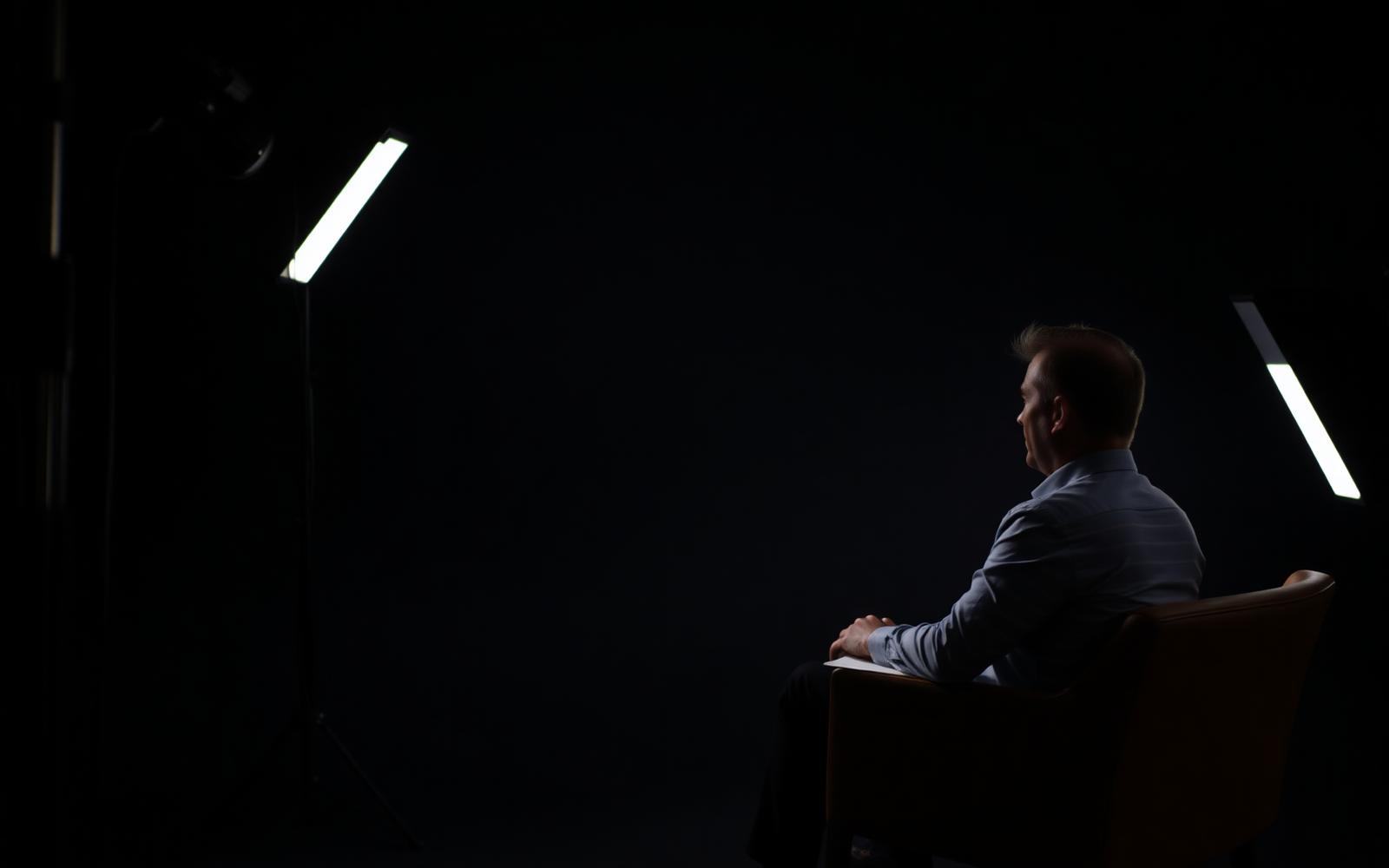
Executives who are articulate in a boardroom often become stilted on camera. It is rarely a lack of ability. It is the combination of an unfamiliar setup, a vague brief, and the belief that they are supposed to sound like a press release.
Almost all of it is fixable before the shoot day.
Send topics, never a script
The instinct is to send the exact questions so the subject can prepare answers. In practice this produces memorized recitation, and memorized recitation is immediately visible on camera — the eyes go up and to the side, the rhythm flattens, and the delivery loses the conviction that made the person worth filming.
Send three to five topic areas instead. "How the team approaches onboarding" gives someone something to think about. "Please describe our onboarding process in under sixty seconds" gives them something to rehearse.
Explain the one structural rule
Interview footage is almost always edited without the interviewer's voice. That means an answer has to stand alone. If the question is "why did you start the program" and the answer begins "because we saw a gap," the clip is unusable on its own.
Ask subjects to fold the question into the answer: "We started the program because we saw a gap." This one instruction improves usable footage more than any other piece of preparation, and it takes ten seconds to explain.
Set expectations about repetition
Tell people in advance that you will ask some questions more than once, that stopping mid-sentence and restarting is completely normal, and that nothing is live. Subjects who do not know this treat every stumble as a failure and get progressively tenser. Subjects who do know it relax and give better second takes.
Wardrobe guidance that actually matters
- Solid mid-tone colors read best; pure white can clip and pure black loses detail
- Avoid fine patterns, tight stripes, and small checks, which shimmer on camera
- Avoid noisy fabrics and long necklaces that knock against a lavalier microphone
- Bring a second option in a different color in case of a clash with the background
- Consider whether the look should match existing brand imagery
Protect the time
Light and test the setup before the subject arrives. An executive who spends fifteen minutes sitting under lights while a stand is repositioned starts the interview already impatient. Twenty prepared minutes beats an hour of interrupted ones.
Tell the subject exactly how long they will be needed and then honor it. Nothing degrades an interview faster than someone watching a meeting start without them.
Start with a throwaway question
The first two minutes of any interview are warm-up, so use them deliberately. Ask something easy and unrelated to the deliverable — how they got into the field, what the team is working on this week. It settles the voice, sets the conversational register, and gives the editor a natural baseline to cut against.
When someone freezes
Stop the take and talk normally. Ask the question again as if in conversation rather than as an interview prompt, and let them answer to you rather than to the lens. Most people are fluent in conversation and stiff in performance; the job is to keep them in conversation while the camera happens to be running.
If a specific phrasing is not working after three attempts, change the question rather than the person. The block is usually in the framing of the question, not in the subject.
A short pre-shoot brief to send
- Here are the topics we will cover — no need to prepare exact wording
- Please include the question in your answer so the clip stands alone
- We may ask the same thing a couple of times; that is normal, not a problem
- Wear solid mid-tone colors, avoid fine patterns and noisy fabrics
- We will need you for a defined block of time and will finish on schedule
- Nothing is live — anything you are unhappy with can simply be retaken
Send that six-line brief a few days ahead and the interview will already be better than most corporate footage, before a single light is turned on.
Related services